Salesforce Partner Cloud Fundamentals: Managing Partners in Salesforce Loyalty Management
The Power of the Coalition
For years, the gold standard of loyalty was the standalone program: a closed loop where a customer earned points with Brand A and redeemed them only with Brand A. While these programs remain valuable for retention, the modern consumer landscape has shifted. Today’s customers prefer ecosystems. They engage most deeply with “coalition” models, like airline alliances or credit card rewards, that offer utility across a broad network of their daily lives, rather than locking value inside a single storefront.
To meet this demand without requiring a massive custom build, Salesforce Loyalty Management introduces a specific architectural component: the Loyalty Program Partner object. This object serves as the core mechanism for extending your loyalty architecture beyond your own walls. It allows you to seamlessly integrate third-party brands into your program ecosystem, transforming a static, single-brand initiative into a dynamic network where partners can easily plug in to offer accrual or redemption opportunities without the need for heavy custom coding.
Structuring Partner Relationships (Accrual vs. Redemption)
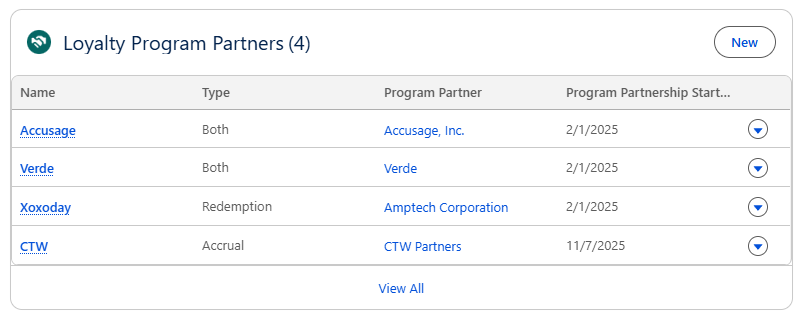
Once a partner is onboarded into the system, the next critical step is defining the nature of their participation in the value exchange. Salesforce Loyalty Management in Partner Cloud allows you to categorize partners based on how they interact with your program’s currency.
- Accrual Partners: These are partners that reward members with points for their transactions. This setup is ideal for expanding the earning velocity of your program.
- Example: A hotel loyalty program might onboard a car rental agency as an accrual partner. When a member books a car, they earn points toward their hotel status, incentivizing them to use that specific agency.
- Redemption Partners: These partners allow members to spend their accumulated points to purchase products or services. This increases the utility of your points, making them more valuable to the consumer.
- Example: A grocery store chain might partner with a fuel station. Shoppers can “burn” the points earned from their weekly grocery run to pay for gas at the partner station.
- Dual Roles: It is important to note that these roles are not mutually exclusive. A single partner record in Salesforce can be configured as “Both,” meaning the partner rewards members with points for transactions and allows members to spend their points on products or services. This creates a fully reciprocal relationship where value flows in both directions.
If you find this article interesting, we also recommend checking out the previous blog post in this series ⤵️
Salesforce Partner Cloud Fundamentals: Driving Partner Performance with Loyalty Management
The Granular Details: Product Integration
While establishing a partner relationship is the first step, the real power lies in the details of the agreement. In the real world, partnerships are rarely blanket agreements where every single transaction qualifies for rewards. They are often highly specific, for example, an airline partner might award points only on “Premium” seat bookings, or a retailer might exclude low-margin clearance items from earning points.
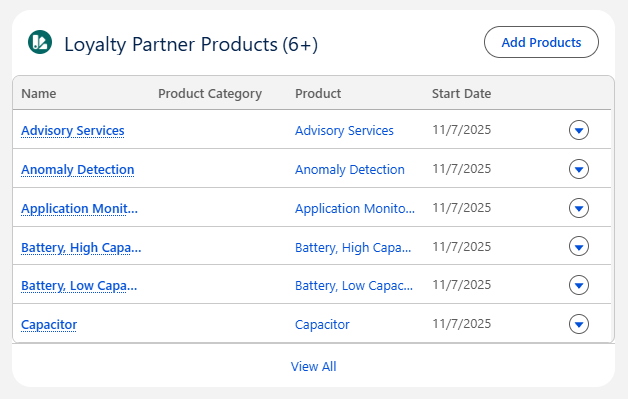
Salesforce enables this level of granularity through Product Integration. You can associate specific Products or entire Product Categories directly with a Loyalty Program Partner record. This configuration acts as a filter, ensuring that transaction journals are validated against the correct partner catalog. By defining these associations, you ensure that accrual or redemption rules are triggered only when a member transacts with eligible items, protecting margins and ensuring compliance with specific partner contracts.
The Financial Ledger (Transaction Journals)
When you extend a loyalty program to external partners, points cease to be just a metric of engagement; they represent actual financial liability. To manage this complexity, Salesforce relies on the Transaction Journal.
Every time a member interacts with a partner, whether earning points for a purchase or redeeming them for a service, the system automatically generates an immutable ledger entry known as a Transaction Journal. This record captures the exact details of the event, including the member, the partner involved, the transaction amount, and the currency impact.
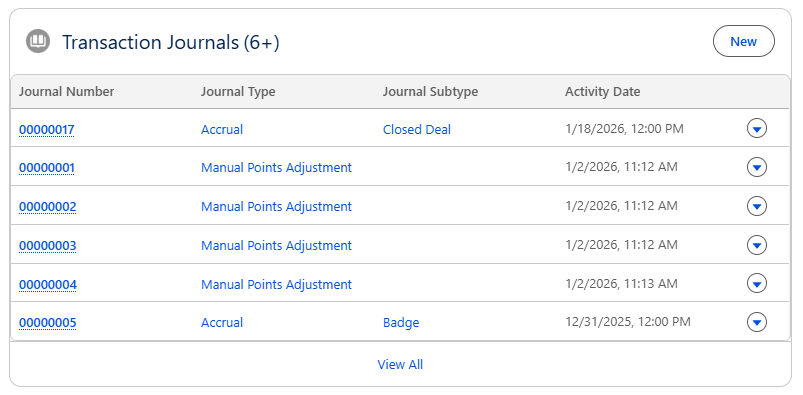
In a partner ecosystem, this journal serves as the single source of truth for financial reconciliation. It effectively acts as an “invoice.” At the end of a reporting period, program managers can aggregate these records to audit activity and reconcile costs, for example, calculating exactly how much to bill an accrual partner for the points issued on their behalf, or how much to reimburse a redemption partner for the rewards they provided.
Conclusion
Expanding a loyalty program to include external partners transforms it from a static retention tool into a dynamic value ecosystem. By creating a coalition model, businesses not only drive higher engagement from existing members but also benefit from valuable cross-brand traffic that unlocks new customer segments.
The true power of Salesforce Loyalty Management lies in its ability to scale this ecosystem without significant technical debt. Onboarding a new partner is primarily a configuration task, defining the relationship, mapping the products, and setting the rules, rather than a heavy custom development project. This agility allows businesses to react quickly to market opportunities and grow their partner network with speed and precision.
Ready for a Change?
Salesforce Partner Cloud offers many more features to enhance your experience, and we’re proud to be one of the top Salesforce partners for PRM, delivering full Partner Cloud implementations.
Reach out to us today to see how Partner Cloud can elevate your partner strategy.