Salesforce Partner Cloud Fundamentals: Driving Partner Performance with Loyalty Management
The Evolution of Loyalty
For decades, customer loyalty programs were defined by a simple, transactional concept: “earn and burn.” A customer made a purchase, earned points, and eventually redeemed them for a reward. While this model still exists, the landscape of customer loyalty has shifted dramatically. Today’s customers expect more than just a punch card; they demand personalized, connected experiences that recognize them as individuals, not just account numbers. They seek engagement that spans every interaction they have with a brand, from marketing emails to customer service calls.
To meet these evolving expectations, businesses need a system that goes beyond basic point counting. Salesforce Loyalty Management creates an end-to-end solution designed to cater to both B2B and B2C needs across various industries. Built directly on the Salesforce platform, it allows businesses to configure and deploy comprehensive loyalty programs that are fully integrated with their existing customer data, rather than operating in a silo. This unification allows organizations to move away from fragmented incentives and toward a holistic strategy that drives true lifetime value.
The Unified Platform Advantage (360 Degree View)
The core value proposition of Salesforce Loyalty Management is that it does not operate in a silo. Because it is built directly on the Salesforce platform, it is fully integrated with your existing Salesforce org. This architecture allows you to seamlessly connect loyalty data, such as member tiers, point balances, and recent activities, directly with Service Cloud, Sales Cloud, and Marketing Cloud.
This integration unlocks a true 360-degree view of the customer, empowering every team with the right information at the right time. Instead of toggling between different systems to check a balance, a service agent can view a member’s profile, recent transactions, and current tier status directly from the Service Console. This visibility allows teams to provide hyper-personalized support and targeted offers based on a member’s actual status and behavior, rather than treating them like a stranger.
If you find this article interesting, we also recommend checking out the previous blog post in this series ⤵️
Salesforce Partner Cloud Fundamentals: Salesforce Partner Cloud Outcome-Based Enablement Guide
Flexibility for Any Business Model (B2B & B2C)
One of the most powerful aspects of Salesforce Loyalty Management is its flexibility to support diverse business models within a single solution. While many legacy platforms are rigid in how they define a “member,” Salesforce allows you to configure programs for both individual consumers and business entities.
Member Types: B2B and B2C
The platform’s data model is designed to handle both Business-to-Consumer (B2C) and Business-to-Business (B2B) scenarios seamlessly. When setting up a program, you define the Member Type, which determines the underlying Salesforce record used:
- Individual Members: Mapped to Contact records, perfect for traditional retail or hospitality programs targeting individual shoppers.
- Corporate Members: Mapped to Account records, enabling B2B use cases such as rewarding resellers, distributors, or corporate clients based on their aggregate business volume.
Program Partners
Beyond direct relationships, Salesforce enables you to expand your program’s reach through the Loyalty Program Partner feature. This allows businesses to build a network of brand advocates and partners, creating a “coalition” style model. You can configure specific partners as:
- Accrual Partners: Partners where your members can earn points (e.g., earning miles when booking a car rental).
- Redemption Partners: Partners where your members can spend their points (e.g., using points to buy a partner’s product).
This feature also allows you to associate specific products or product categories with a partner, ensuring that rules and incentives are triggered only for eligible partner transactions.
Incentivizing the Channel: A Loyalty Program for Your Partners
While Loyalty Management is often associated with consumer retail, one of its most powerful use cases lies within the Salesforce Partner Cloud. If your company manages a network of resellers, distributors, or agents, you can leverage Salesforce Loyalty Management to build a B2B loyalty program that rewards partners not just for revenue, but for the behaviors that drive long-term success.
Partners as Members
In this scenario, your partners (the “Partner Users” in your community) become the members of your loyalty program. Using the flexible data model, you can treat the Partner Account (the company) or the Partner Contact (the individual sales rep) as the Member. This allows them to log in to the Partner Portal and see a “Loyalty Dashboard” displaying their current tier, points balance, and progress toward the next level.
Rewarding Key Activities (Beyond Sales)
Traditional partner programs often focus solely on sales volume (Rebates). With Loyalty Management, you can use Flow and Transaction Journals to automate rewards for a much broader range of high-value activities:
- Deal Registration: Automatically award points when a partner registers a qualified lead.
- Enablement: Grant points when a partner user completes a certification or training module.
- Marketing: Issue points for executing a joint marketing campaign or attending a vendor summit.
B2B-Centric Rewards
The “Earn and Burn” model is adapted here for business value. You can configure Non-Qualifying Currencies (spendable points) that partners can redeem for rewards that help them grow. Instead of consumer goods, partners might redeem points for:
- Market Development Funds (MDF): Converting points into marketing budget.
- Training Vouchers: Free access to advanced certification courses.
- Support & SWAG: Priority support tickets or branded merchandise for their team.
Automating Tiers
Finally, you can use Tier Groups to automate your partner hierarchy (e.g., Bronze, Silver, Gold Partner). By using Qualifying Points (status points), the system can automatically upgrade a partner to “Gold” status once they hit a certain threshold of activity, instantly unlocking the associated Benefits like higher margins or dedicated account management.
Speed to Market: “Clicks, Not Code”
A major barrier to launching loyalty programs has traditionally been the heavy technical lift required to build custom logic. Salesforce Loyalty Management addresses this with a “clicks, not code” philosophy, empowering business users to configure complex programs using declarative tools rather than relying on developers to write custom code for every rule.
This configuration-first approach is built on a few core building blocks that allow you to assemble a program quickly:
- Tier Groups: Instead of hard-coding status levels, you configure Tier Groups to define the hierarchy of your program (e.g., Silver, Gold, Platinum). You can define whether the tier model is fixed or rolling and how long a tier status remains valid.
- Currencies: The platform allows you to define multiple types of Loyalty Program Currencies. You can distinguish between Qualifying Points (used solely to measure engagement and determine tier status) and Non-Qualifying Points (spendable currency for rewards).
- Benefits: Once tiers are established, you can easily map privileges to them using Loyalty Program Benefits. These records define the specific perks a member is entitled to, such as free shipping or priority support, and link them directly to the appropriate tier level.
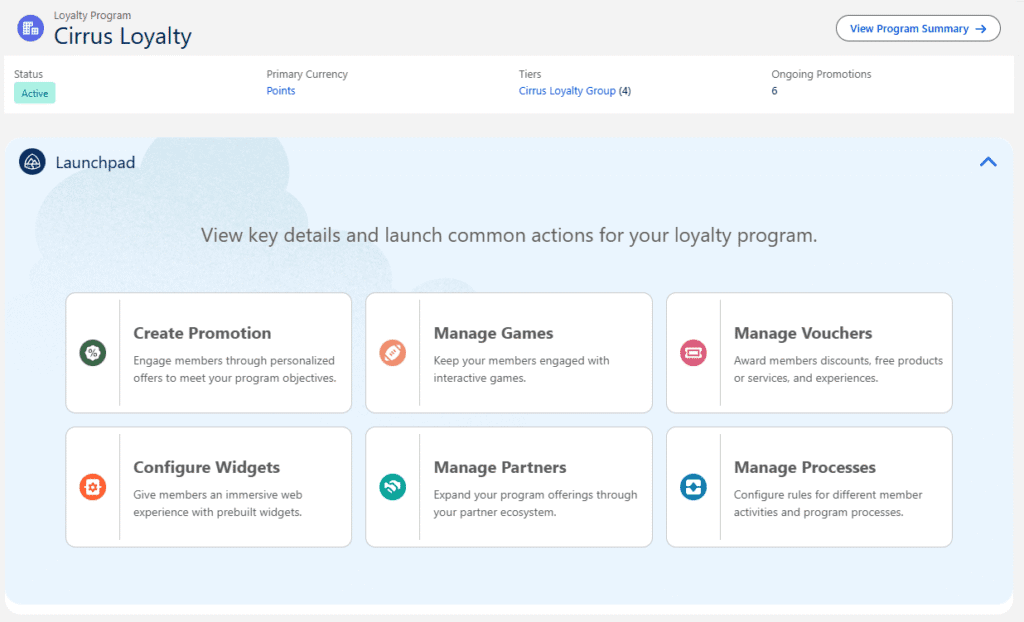
This modular structure means that adjusting a qualification rule or adding a new benefit is a simple configuration change, drastically reducing the time it takes to iterate and evolve the program.
Conclusion
Salesforce Loyalty Management represents a fundamental shift in how businesses should approach customer retention. It is not just a tool for issuing points; it is a strategic asset that drives loyalty by integrating rewards and recognition into every single customer interaction. By connecting loyalty data with service, sales, and marketing, organizations can transform transactional relationships into deep, long-term advocacy.
The future of loyalty lies in connection, not isolation. Leaders must rethink their loyalty strategies, moving away from siloed programs and embracing a holistic approach that treats loyalty as a core component of the entire customer ecosystem. Now is the time to unlock the full potential of your customer data and build a loyalty program that truly revolves around the member.
Ready for a Change?
Salesforce Partner Cloud offers many more features to enhance your experience, and we’re proud to be one of the top Salesforce partners for PRM, delivering full Partner Cloud implementations.
Reach out to us today to see how Partner Cloud can elevate your partner strategy.