
How to Delete an Experience Cloud Site in Salesforce: Deactivate, Archive, or Unarchive
Last updated: July 23, 2026
Salesforce Experience Cloud is widely used by organizations on Salesforce CRM to manage their business operations, serving as the optimal method to connect with external audiences through a visually appealing portal linked to all Salesforce data.
Quick answer:
You can’t truly delete an Experience Cloud site in Salesforce the way you delete a record. In Salesforce, you typically deactivate a site (make it inaccessible) and then archive it. Later, you can unarchive and reactivate it if needed.
Deleting an Experience Cloud site is often part of a larger portal lifecycle decision. Organizations may deactivate or archive a site when they are cleaning up old communities, replacing a legacy portal, preparing a redesign, migrating users to a new Experience Cloud experience, or simplifying their Salesforce environment. Before making a site inaccessible, teams should understand what will happen to users, URLs, content, integrations, permissions, and active business processes connected to the portal.
Companies may have up to 100 different Salesforce communities within the same org for various purposes, whether it’s a Salesforce customer portal, a Salesforce partner community, or a member and fundraising site.
However, there are instances where starting fresh with a new site becomes necessary, requiring the deletion of the previous one. In this blog post, we’ll provide you with instructions on how to deactivate and activate a digital experience site on Salesforce.
Deactivate vs Archive vs Unarchive
| Action | What Happens | When to Use |
|---|---|---|
| Deactivate | Site becomes inaccessible to users, but admins can still manage it in Builder and Workspaces. | Temporarily disable access or prepare a site for archiving. |
| Archive | Site is removed from active site limits (including the 100-site limit). URL becomes inaccessible. Builder and Workspaces access are restricted. | Retire a site while preserving configuration and content. |
| Unarchive | Site is restored to the org but remains inactive until reactivated. Admins regain access. | Restore a previously archived site for reuse or updates. |
Before You Deactivate or Archive an Experience Cloud Site
Before deactivating or archiving an Experience Cloud site, review what the portal is used for and who depends on it. Even if the site looks inactive, it may still contain important content, user access flows, integrations, redirects, Knowledge resources, or links from emails, documentation, partner materials, or member communications. A short pre-archive review can help avoid broken user journeys, lost access to important resources, or confusion for customers, partners, members, or internal teams.
Before closing an Experience Cloud site, check:
- Whether users still log in or access the portal
- Which pages, files, Knowledge Articles, or records are still needed
- Whether the site is linked from emails, campaigns, documentation, or other websites
- Whether integrations, forms, redirects, or authentication flows depend on the site
- Whether customers, partners, or members need a replacement portal
- Whether content should be migrated to a new Experience Cloud site
- Whether the site should be archived temporarily or replaced permanently.
Step-by-step: How to Delete Experience Cloud Site in Salesforce (Deactivating & Archiving)
Want to use Salesforce and delete an Experience Cloud site in Salesforce? The most important thing you need to know is that you cannot delete a community from Salesforce. Instead, you can make it inactive and close any access by deactivating and archiving your experience site.
To archive your Salesforce community, you need to deactivate it first.
Please take into account that when you archive a site,
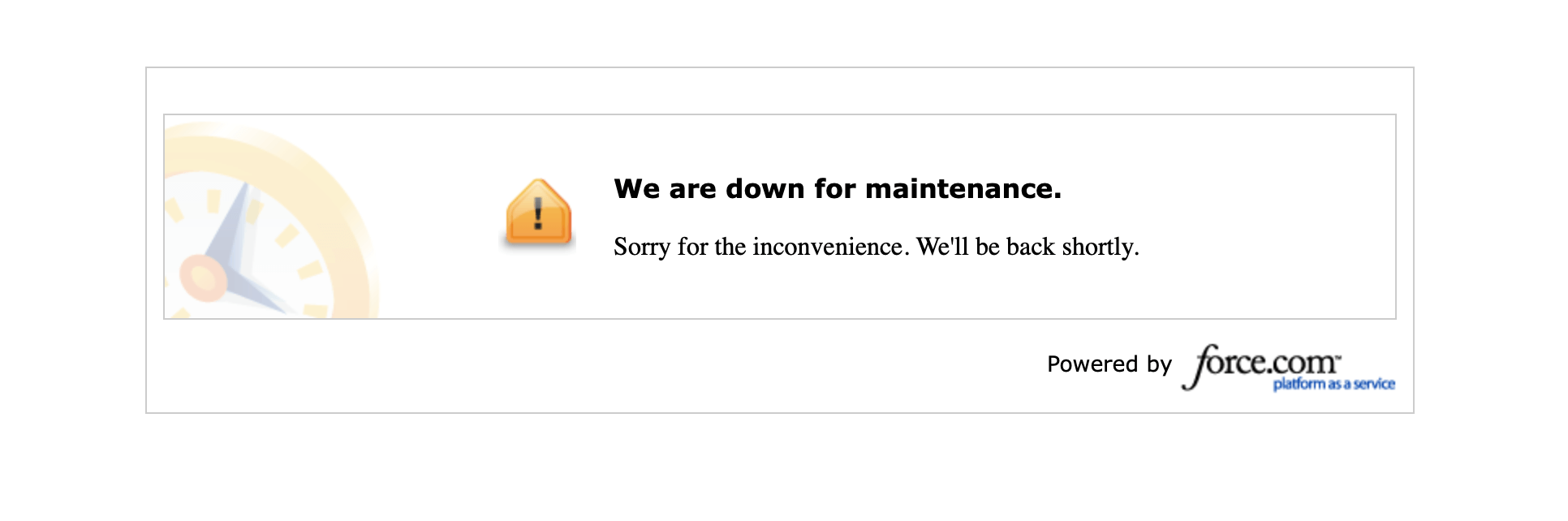
- The site’s URL becomes inaccessible to all users, including administrators. Users will be directed to a “Site under maintenance” page instead of the site.

- Access to the site’s Experience Builder or Workspaces is restricted.
- The site doesn’t count against your organization’s maximum 100 unarchived site limit
- You can always unarchive a site in the future if you need to.
You cannot archive an inactive site that is in Preview status. Activate and then deactivate the site before you archive it.
How to Deactivate a Salesforce Community
To deactivate the site on Experience Cloud:
- Go to Workspaces > Administration > Settings.
- Press the “Deactivate” button.
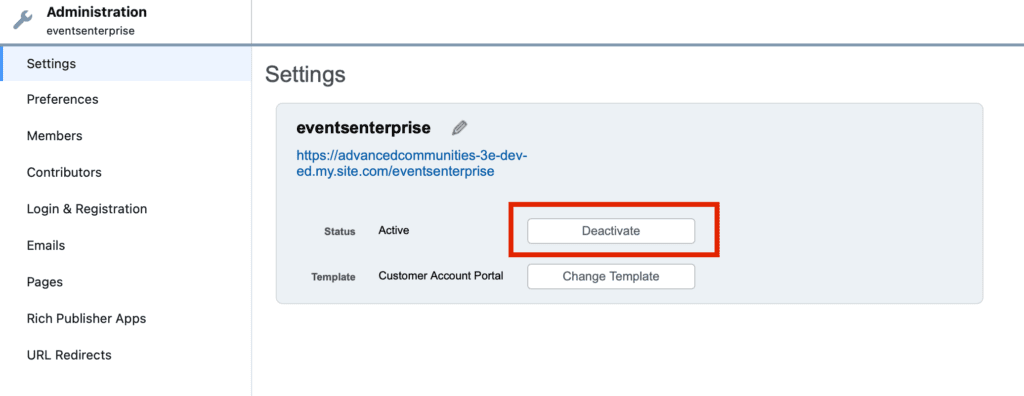
The site becomes inaccessible to users, and the public URL no longer loads the experience.
Step-by-Step: How to Archive an Experience Site in Salesforce?
To archive the Experience Cloud site:
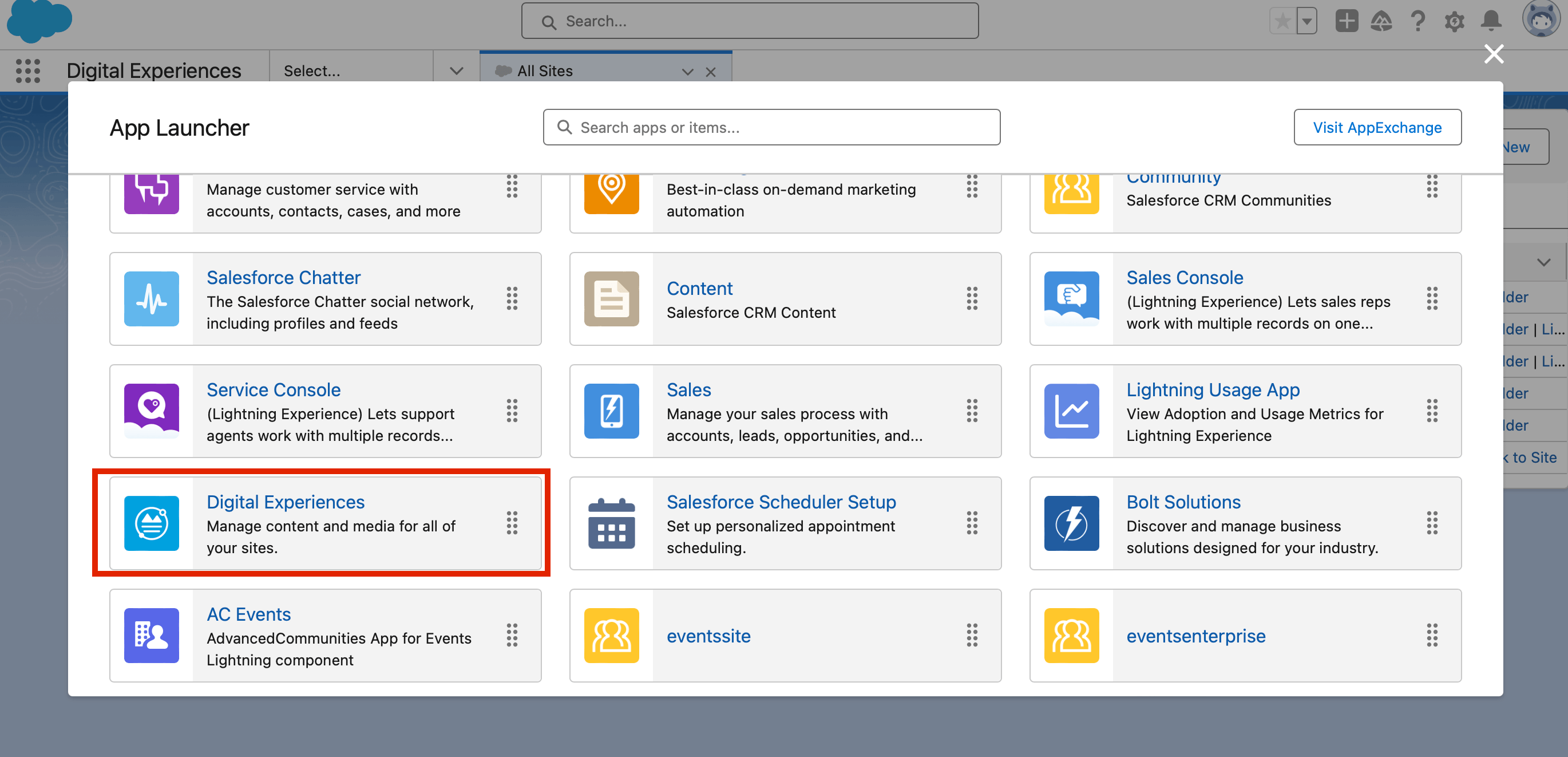
- Go to App Launcher on your internal org.
- Access Salesforce CMS (Digital Experiences) using the App Launcher.

- Navigate to the All Sites tab to view a list of all Experience Cloud sites within your organization.
- Select the name of the site you’d like to archive.
- Once on the site detail page, click on the Archive option.
- Confirm the archiving process by clicking Archive again.

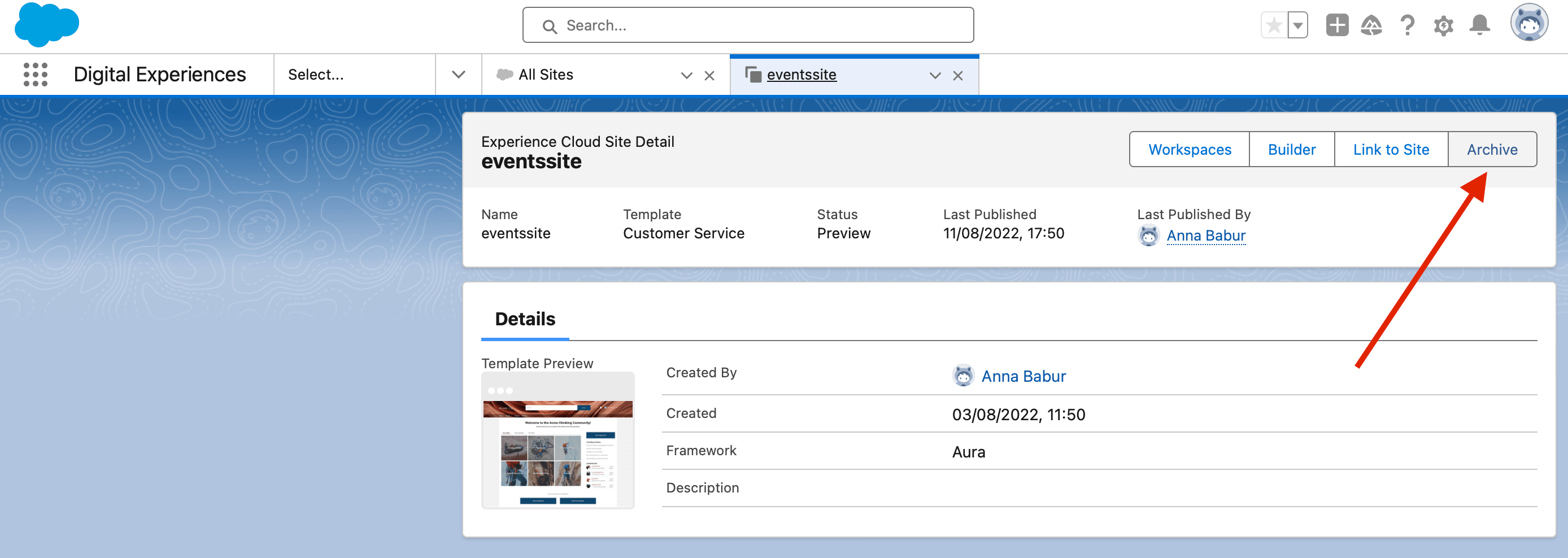
That’s it! The site moves to the Archived Sites list and no longer counts toward active site limits.
Planning a new Experience Cloud site?
If you are archiving an old Salesforce community because your organization needs a cleaner, more scalable, or better-designed portal, Advanced Communities can help with Experience Cloud migration, redesign, implementation, and ongoing optimization.
Our team can help you review your existing site, define what should be migrated or retired, improve the portal architecture, and build a new Salesforce Experience Cloud experience for customers, perform a Salesforce Partner Cloud implementation, or implement a Salesforce-native membership management system. Talk to an Experience Cloud expert today.
How to Unarchive a Community Site?
So, now you know how to deactivate an Experience Cloud site. Let’s explore how to restore it when archived:
- Access Salesforce CMS (Digital Experiences) using the App Launcher.
- Navigate to the All Sites tab, then switch to the “Archived sites” tab to view all archived sites in your org.
- Select the name of the site you’d like to unarchive.

- Once on the site detail page, click the “Unarchive” option.
- Confirm the unarchiving process by clicking “Unarchive” again.
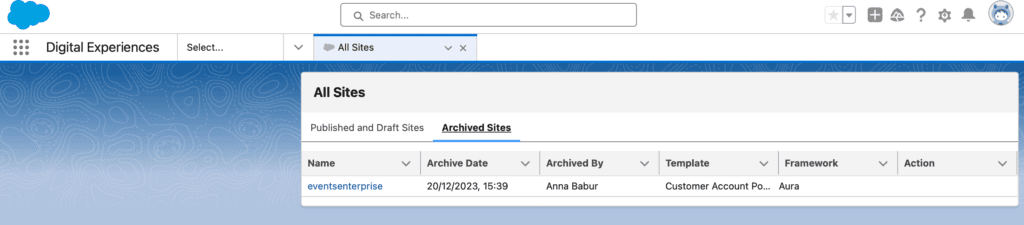
When you unarchive a site, the site’s URL becomes available only to admins. To make it accessible to everyone, you need to activate it.
When to Archive, Redesign, or Rebuild an Experience Cloud Site
Archiving a site is not always the final step. In many cases, organizations archive an old Experience Cloud site because the portal no longer supports current business processes, user expectations, branding, permissions, or content structure. If the site is outdated, difficult to navigate, poorly adopted, or disconnected from current Salesforce processes, it may be better to plan a redesign or rebuild instead of simply closing it. A new Salesforce Experience Cloud implementation can provide a cleaner user journey, better self-service, improved security, updated design, and a more scalable portal architecture.
Consider redesigning or rebuilding your Experience Cloud site if:
- The current portal has low adoption or poor user experience
- Users cannot find the right pages, records, or resources
- The site structure no longer matches your business processes
- Permissions, profiles, or visibility rules became difficult to manage
- The portal was built for an old use case and now needs to support new audiences
- You are moving from a legacy community to a modern Experience Cloud experience
- Your organization needs a customer, partner, support, or member portal with better
self-service.
Need Help With Experience Cloud Migration, Redesign, or Site Cleanup?
If you are deactivating or archiving an Experience Cloud site, it may be the right moment to review your broader portal strategy. Old Salesforce communities often contain outdated content, unused pages, complex permissions, broken user journeys, or legacy configurations that no longer support the business.
Advanced Communities can help you audit your existing Experience Cloud environment, decide what should be archived or migrated, redesign the portal experience, and implement a new Salesforce Experience Cloud site aligned with your current business goals. Whether you need to clean up old sites, migrate users to a new portal, improve self-service, or rebuild a customer, partner, Salesforce support portal, or member experience, our team can help. Book a call with us today.
FAQ
1. How do I unpublish an Experience Site in Salesforce?
You cannot delete or unpublish a site referenced for a community, particularly if it includes Force.com or Sites.com in the domain name. However, you can mark it as inactive to restrict access for everyone.
2. How do I publish an Experience Site in Salesforce?
In Experience Builder, take a look at your site to check if it looks the way you want. If everything is good, click the Publish button on the toolbar to make your changes live. 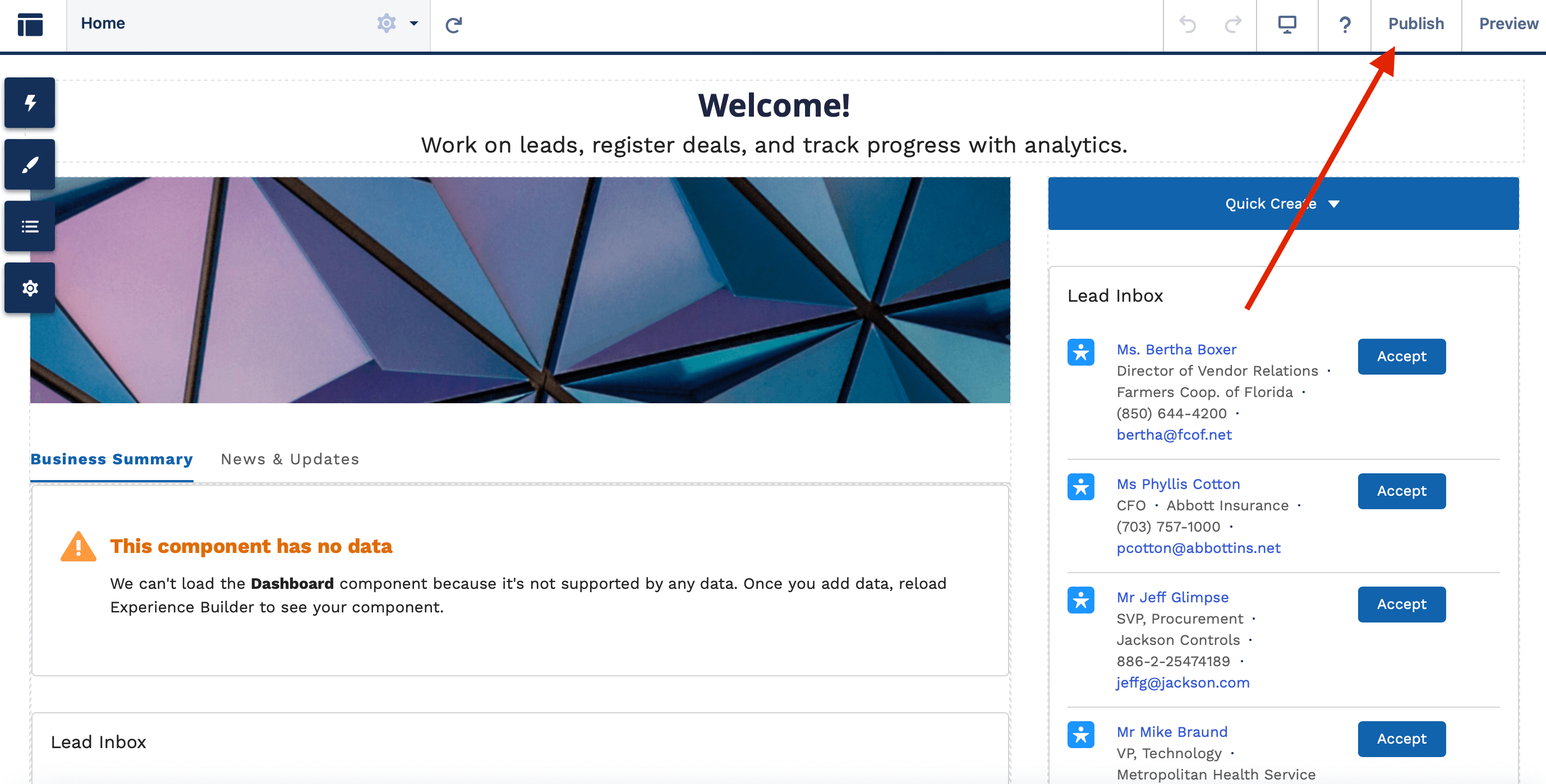
3. How do I delete an Experience Builder in Salesforce?
You can’t delete an Experience Builder from your Experience Cloud platform as this is the main tool used for building communities in Salesforce. You use Experience Builder’s drag-and-drop logic and customization capabilities to easily create and brand sites on top of Salesforce.
4. Can you permanently delete an Experience Cloud site in Salesforce?
In most cases, you do not delete an Experience Cloud site like a regular record. You deactivate or archive it, depending on whether you want to make it inaccessible, remove it from active site limits, or preserve it for future use.
5. What should I check before archiving an Experience Cloud site?
Before archiving a site, check user access, active links, content, integrations, redirects, authentication flows, and whether customers, partners, or members still rely on the portal.
6. When should I rebuild an Experience Cloud site instead of archiving it?
A rebuild may be better if the current site has poor UX, outdated content, low adoption, complex permissions, or no longer supports current business processes. In this case, archiving the old site can be part of a broader migration or redesign plan.
7. Can Advanced Communities help migrate or redesign an Experience Cloud site?
Yes. Advanced Communities can help audit existing Experience Cloud sites, plan migration, redesign portal UX, configure permissions, and implement new customer, partner, support, or member portals on Salesforce.