
How to Enable Global Search in Salesforce Experience Cloud and Improve Portal UX
Last Updated: July, 8, 2026
Salesforce Experience Cloud is an all-in-one platform that offers various features to help users communicate and collaborate with ease. One of the most valuable features of this platform is the Global Search functionality.
Global Search in Salesforce Experience Cloud Sites (formerly Communities) allows users to search across multiple objects and content types from a single search bar. Instead of limiting results to one component, Global Search displays categorized search results tabs and unified results, helping community users find information faster.
For customer portals, partner portals, support communities, and member portals, Global Search directly affects how quickly users can find cases, Knowledge Articles, files, discussions, resources, and custom records. A well-configured search experience improves self-service, reduces support pressure, and helps users get more value from the portal.
What you’ll achieve by enabling Global Search:
- Allow community users to search across multiple objects from one place
- Provide structured, tab-based results (Cases, Articles, Files, Discussions, etc.)
- Reduce time spent looking for information
- Improve self-service and case deflection in support portals
- Deliver a more intuitive and scalable search experience as your community grows
In this article, we will provide a comprehensive, step-by-step guide on how to enable Global Search in Salesforce Experience Cloud sites. Keep reading to learn more about this essential feature and how to set it up.
Need to improve search, navigation, and self-service in your Salesforce Experience Cloud portal?
Advanced Communities helps organizations build Experience Cloud sites, support portals, partner portals, and member portals with the right UX, permissions, Knowledge structure, and Salesforce-native functionality.
What Is Global Search in Salesforce Experience Cloud?
In Salesforce Experience Cloud, Global Search is a Lightning-based search functionality that allows users to search across multiple objects and content types from a single search bar within a community or portal.
It provides a unified search experience and displays results grouped by object in structured tabs, making it easier for users to quickly navigate to the exact type of content they need.
Key Capabilities of Global Search
- Cross-object search — Search across multiple standard and custom objects at once
- Tabbed results view — Results are grouped by object (for example, Cases, Articles, Files)
- Configurable objects — Administrators choose which objects appear in search results
- Permission-based results — Users only see records they have access to
- Optional filtering — Enable filters to refine search results in content-heavy portals
- Fast, unified experience — One search bar across the entire site
How does Global Search Differ from the Standard Search Results component?
In Salesforce Experience Cloud, the standard Search Results component is a simpler, template-based component that displays results returned by the site’s configured search settings. It typically shows results in a single, continuous list and offers limited control over how results are grouped or presented.
The Global Search Results component, on the other hand, is a Lightning-based component designed to provide a more structured and scalable search experience. It organizes results into tabs by object, enables result filtering directly in the component, and provides clearer separation of result types and improved navigation across them.
What Types of Content Can Global Search Find?
The exact results depend on configuration and user permissions, but Global Search can typically search:
- Knowledge Articles (if Knowledge is enabled and visible to users)
- Cases (commonly in support portals)
- Files
- Discussions
- Groups
- Accounts and Contacts (if appropriate for the community)
- Custom objects supported in Lightning Experience
- Other standard Salesforce objects included in the site
Global Search strictly respects object-level permissions, sharing rules, and visibility settings. If a user does not have access to a record, it will not appear in search results.
When properly configured, Global Search becomes a central navigation tool within an Experience Cloud site, significantly improving discoverability and self-service efficiency.
Why Global Search Matters for Portals and Self-Service
In Experience Cloud, search is one of the most important parts of the user journey. Portal users often do not know where a specific article, case, document, discussion, or custom record is stored. They expect the portal to work like a connected digital workspace where relevant information can be found quickly.
For support portals, Global Search can help customers find Knowledge Articles before submitting a case.
For partner portals, it can make enablement materials, deal records, files, and program resources easier to access. For member portals, it can help members find events, resources, discussions, directories, and personalized content. That is why Global Search should be planned as part of the overall Experience Cloud UX and the Salesforce knowledge management tool you’re using, not treated as a small admin setting.
Prerequisites
Before enabling Global Search, make sure:
- You have an active Experience Cloud site
- You have access to Experience Builder
- A Search page added in the Pages menu
- Users have proper object permissions and sharing visibility
- If searching Knowledge Articles:
- Knowledge is enabled
- Articles are published
- Community users have visibility access
Remember
Global Search respects object-level permissions, field-level security, and sharing rules, meaning site users can only see records they are authorized to access.
Step-By-Step: Enabling Global Search Results
Follow these instructions to enable Global Search in Salesforce Experience Cloud:
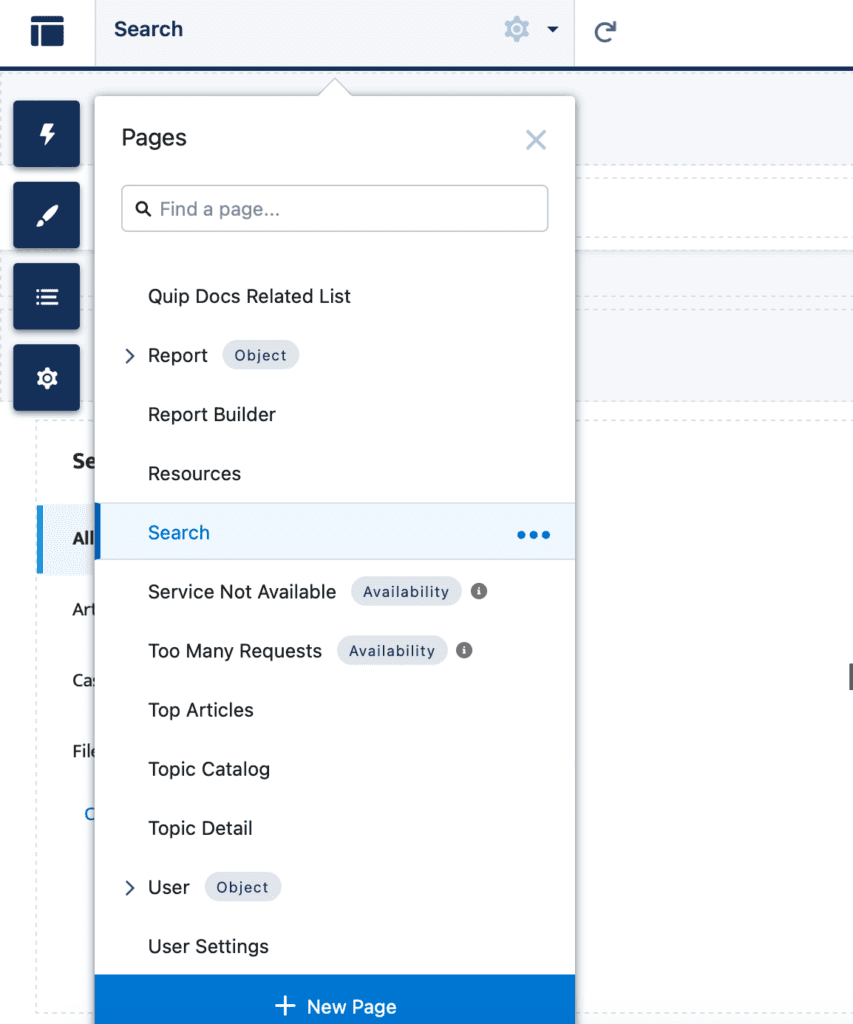
Open the Search Page in Experience Builder
- Go to the Experience Builder.
- Navigate to the Pages menu by clicking on Home in the top navigation bar.
- Once you’re in the Pages menu, enter “Search” in the search box and select “Search” from the list.
Replace the Standard Search Results Component
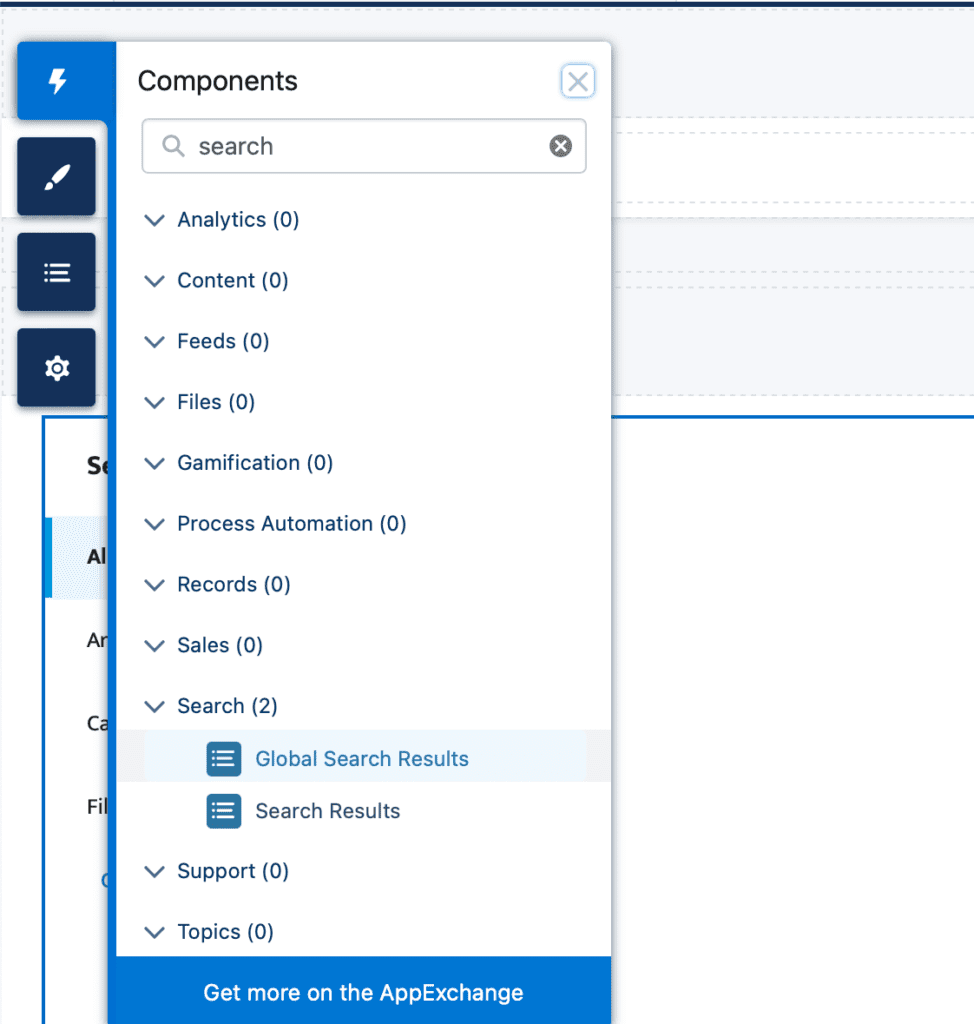
- Delete the standard Search Results component from canvas.
- Choose the Global Search Results component from the list on the left panel, and drag and drop it onto the canvas.
Configure Global Search Results Component
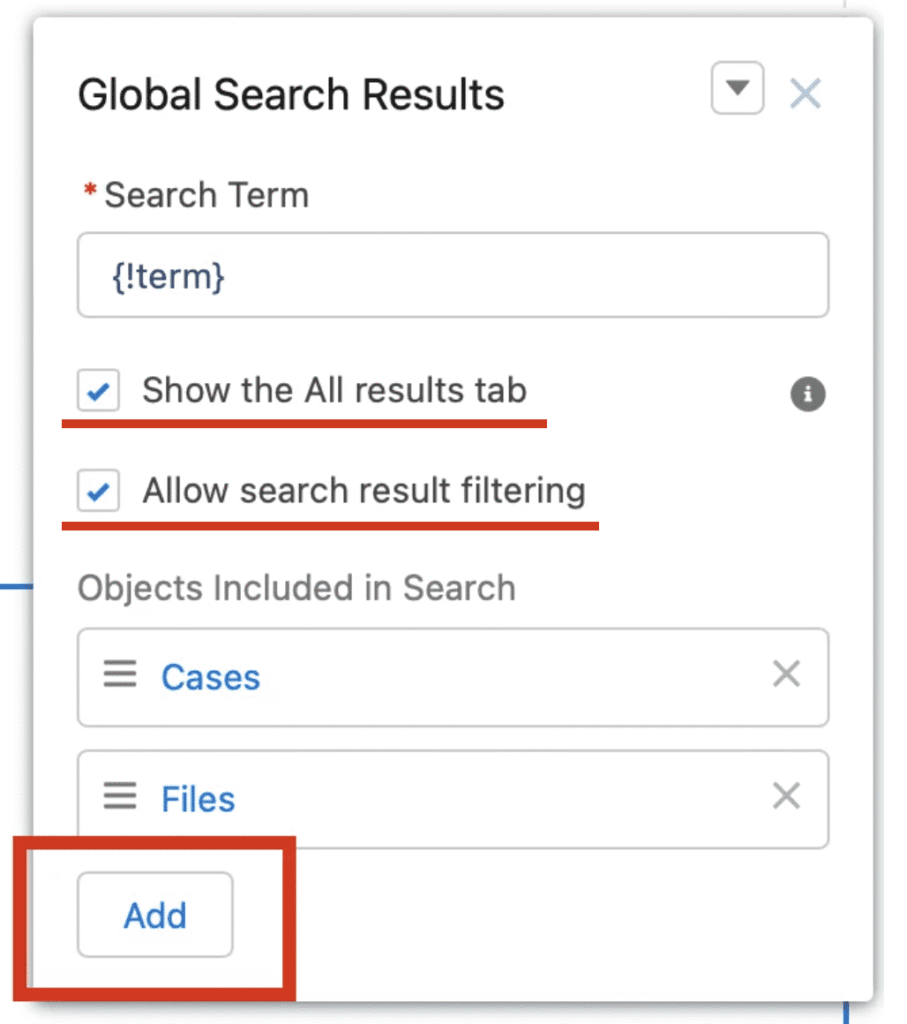
Click on the Global Search Results component to access its properties.
Key settings to configure:
- Show the “All Results” Tab – turn in ON to display a combined results tab. Turn it OFF if you prefer only object-based tabs.
- Allow Search Result Filtering – define whether users will be able to refine search results (recommended for content-heavy portals)
- Objects Included in Search – by default, the Global Search Results component displays results for Articles (if Knowledge is enabled), Discussions, Cases (for Service Cloud users), and Groups. However, you can easily add any other searchable object in Lightning Experience that is supported in the Customer Service template:
- Click the “Add” button in the Property Editor of the component.
- Choose the objects you want to include in search results, whether it’s a standard or custom object (commonly used objects are Cases, Knowledge Articles, Files, Discussions, Groups, custom objects relevant to your business).
Best practice
Don’t add every available object. Include only what users truly need.
Save, Publish, and Test
- After you’ve added all the desired objects, click Save and Publish.
- Go to the home page, enter a keyword into the search bar, and click Search. You should see search results that include a tab with the added object.
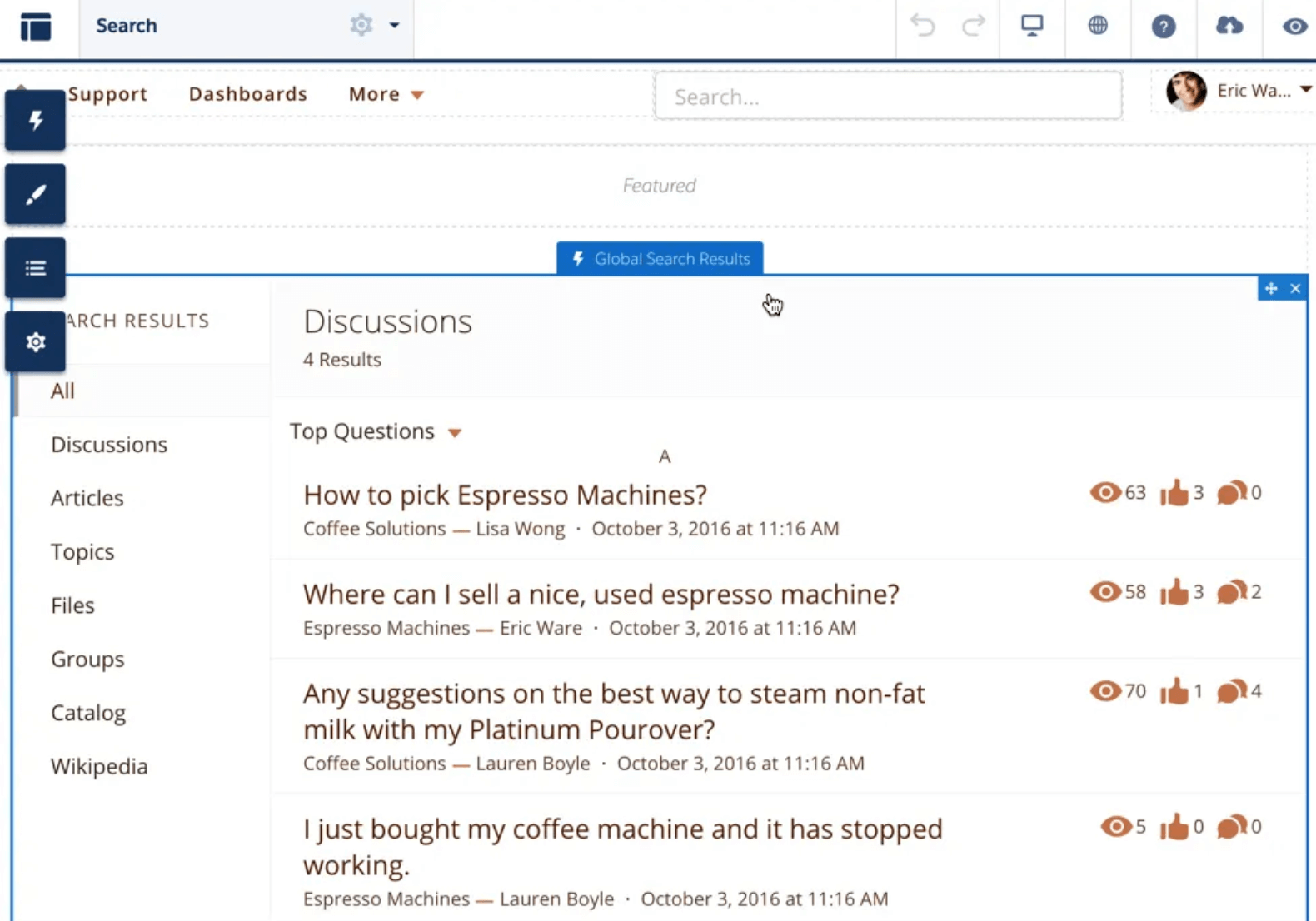
- Verify if tabs appear correctly, records show based on visibility, and filters work properly
- Test using both Admin and Community User profiles. This ensures permissions are correctly configured.
Best Practices for Global Search Configuration
Choose the Right Objects
Usually, 3–7 objects are sufficient for most Experience Cloud sites. Adding too many objects creates excessive tabs, increases cognitive load, and makes it harder for users to quickly identify the right result category. Focus only on the objects users actively interact with, such as Cases in support portals or Knowledge Articles in self-service communities.
Match User Expectations
Search configuration should reflect how users think about information. You can customize Global Search for your users. If they primarily visit the portal to manage support requests, the Cases tab should be clearly visible and prioritized.
Make sure tab labels align with business terminology used in your organization so users instantly recognize where to click.
Use Filtering Wisely
Enable filtering when your site contains a large volume of content, such as extensive Knowledge bases or many uploaded Files. Filters help users narrow down results faster and reduce frustration.
However, avoid overcomplicating the interface with unnecessary filters in smaller or simpler communities.
UX Tip: “All Results” vs Tabbed Results
Enable the All Results tab for general-purpose portals where users may not know which object their information belongs to. This provides a consolidated overview and improves discoverability.
In structured or role-specific communities, tab-only search can create a cleaner and more focused user experience.
Ensure Search Visibility Is Properly Configured
Global Search only returns records that users have permission to access, based on object permissions, sharing rules, and visibility settings. Before troubleshooting search issues, always verify that profiles, permission sets, and sharing configurations are correctly set up.
Testing search behavior with a real community user profile (not just an admin profile) helps confirm that visibility is configured properly and avoids false assumptions during setup.
Plan Search Around User Roles
Before adding objects to Global Search, define who will use the portal and what each user group needs to find. Customers, partners, members, and internal users may need access to different records and content types. Search should reflect these user journeys.
Connect Search With Knowledge Architecture
If your Experience Cloud site uses Salesforce Knowledge, search quality depends heavily on how Knowledge Articles are structured, categorized, tagged, and exposed to users. Poor Knowledge architecture can make even a technically correct search setup feel ineffective.
Review Permissions Before Launch
Global Search respects permissions and sharing rules. Before launch, test search results with real portal user profiles, not only with admin access. This helps avoid situations where admins see the expected results but customers, partners, or members see nothing.
Global Search for Support, Partner, and Member Portals
The best Global Search configuration depends on the type of Experience Cloud site you are building.
- For support portals, users usually need fast access to Knowledge Articles, Cases, Files, and support resources. A well-structured search experience can reduce repetitive support requests and improve case deflection.
- For Salesforce PRM portals, search should help partners find enablement content, sales materials, product documentation, deal-related records, program updates, and marketplace resources.
- For Salesforce member portals, search should support member self-service by making events, resources, directories, discussions, renewal information, and Knowledge content easier to find.
The key is to include only the objects and content types that are truly useful for each user group. Adding too many objects may create a confusing search experience and reduce usability.
Troubleshooting Global Search Common Issues
1. “No results found”
- Check object permissions
- Verify sharing rules
- Confirm records are published (for Knowledge)
2. Object doesn’t appear in Add list
- Ensure object is supported in Lightning Experience
- Confirm user license allows access
- Verify object visibility in the site
3. Knowledge Articles don’t appear
- Knowledge must be enabled
- Articles must be published
- Community user profile must have article visibility
4. Admin sees results, but community user doesn’t
This is almost always a permissions issue:
- Object-level access
- Record-level sharing
- Profile or permission set restrictions
5. “Too many requests” or “Service not available”
- Temporary platform limit or indexing delay
- Recheck indexing status
- Retry after a few minutes
Need Help With Experience Cloud Search and Portal UX?
If your Experience Cloud users cannot find the right information, the problem is not always the search component itself. It may be connected to portal architecture, Knowledge structure, permissions, navigation, object visibility, or the overall user experience.
Advanced Communities can help you review and improve your Salesforce Experience Cloud site, configure Global Search, structure Knowledge content, optimize permissions, and create a smoother self-service experience for customers, partners, or members.
Whether you are building a support portal, PRM portal, online community, or member portal, our team can help you turn Salesforce Experience Cloud into a more useful and scalable digital experience.
Book a call with us to improve your Experience Cloud site today.
FAQ
1. What is the Global Search Results component in Experience Cloud?
It’s a Lightning component that displays categorized search results across multiple objects within an Experience Cloud site.
2. Why can’t some users see search results in a Salesforce community?
Search only displays records users have access to. Missing permissions, sharing rules, or visibility settings are the most common causes.
3. How do I add Cases, Files, or Knowledge Articles to Global Search?
Open Experience Builder → Search page → Select Global Search Results → Click Add under Objects Included in Search → Choose the object → Save & Publish.
4. Global Search vs standard Search Results — what’s the difference?
Global Search supports multi-object tabs, filtering, and better customization, while the standard Search Results component is more limited.
5. Does Global Search show private records?
No. It strictly respects user permissions and sharing settings.
6. How do I test Global Search after publishing?
Log in as different user profiles (Admin and Community User), perform searches, and verify tab visibility, filters, and result accuracy.
7. How can Global Search improve self-service in Experience Cloud?
Global Search helps portal users find Knowledge Articles, cases, files, resources, and custom records faster. This improves self-service and can reduce the number of repetitive support requests.
8. Why is Global Search important for partner and member portals?
Partner and member portals often contain many different types of content, including documents, resources, discussions, events, directories, and custom records. Global Search helps users find relevant information without browsing through multiple sections manually.
9. When should you ask an Experience Cloud partner to help with search configuration?
You may need expert help if search results are incomplete, users cannot see the right records, Knowledge content is hard to find, or the portal has different user groups with different permissions and content needs.