
Translate Custom Labels Salesforce (and Rename Managed Package Field Labels)
Last Updated: February, 25, 2026
The question of how to translate or rename custom labels and fields in an installed Salesforce Experience Cloud site or AppExchange applications is a common one, especially since there is typically limited flexibility in making changes to managed packages. However, it is indeed possible to do so! To address this, we have put together a blog post and brief instructional video detailing how you can translate custom labels in Salesforce and even override custom field labels.
Quick Answer
In a managed package you can’t change API Names, but you can rename what users see by translating or overriding labels. There are two main scenarios:
- Field Labels / Buttons / Actions – overridden via Translation Workbench → Override.
Use this when you need to change how object fields, actions, links, or field sets appear on pages. You select the language, managed package, component type, object, and label aspect, then enter the new display value.
- Custom Labels – translated or overridden via Custom Labels or Local Translations / Overrides.
Use this when the package includes reusable UI text (messages, headings, button captions, help text). You open the label record, choose a language, and enter the translated or replacement value that users will see.
Where to do it:
- Setup → Translation Workbench
Central place to enable languages, manage translations, and create overrides for packaged components. - Local Translations / Overrides (from label record)
Open a label record and create a language-specific override that replaces the original displayed text without changing the package metadata in Salesforce. - Setup → Custom Labels
Used to locate packaged labels and add translations or local overrides for specific languages.
After changes, always check user language settings, profile permissions, page cache or browser refresh, and visibility in Experience Cloud if used there.
Understanding Custom Labels
To start, let us provide a definition of managed packages. Essentially, a managed package serves as a bundle containing all the components of a Salesforce application, and it serves as a means for installing applications within Salesforce organizations. These packages contain components necessary for the proper functioning of your application.
Because managed packages protect components, you cannot edit or delete packaged labels, but you can override how they appear.
Common use cases:
- Translate UI text for multilingual communities
- Replace vendor terminology with internal naming
- Adjust button or message wording for clarity
How to Translate Custom Labels?
Prerequisites
Before you start translating custom labels, make sure the following settings are in place:
- The Translation Workbench in Salesforce is enabled ( go to Setup → Translation Workbench → Translation Language Settings and ensure your language is enabled)
- Required admin permissions provided
- Target language added in Translation Language Settings
Step-by-Step Instructions
Translations for custom labels determine what text to display for the label’s value when a user’s default language is set to the translation language. To override existing translations:
- Go to Setup → Custom Labels and select the appropriate package.
- Filter labels by the installed package if needed.
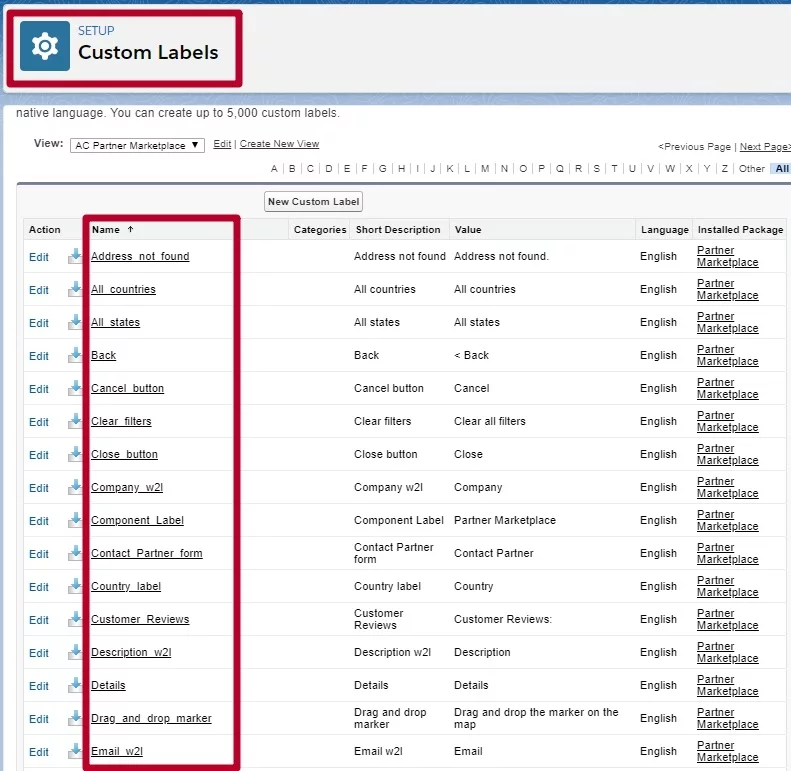
3. Open the custom label record by clicking on its name → Choose the “New Local Translations/Overrides” button.
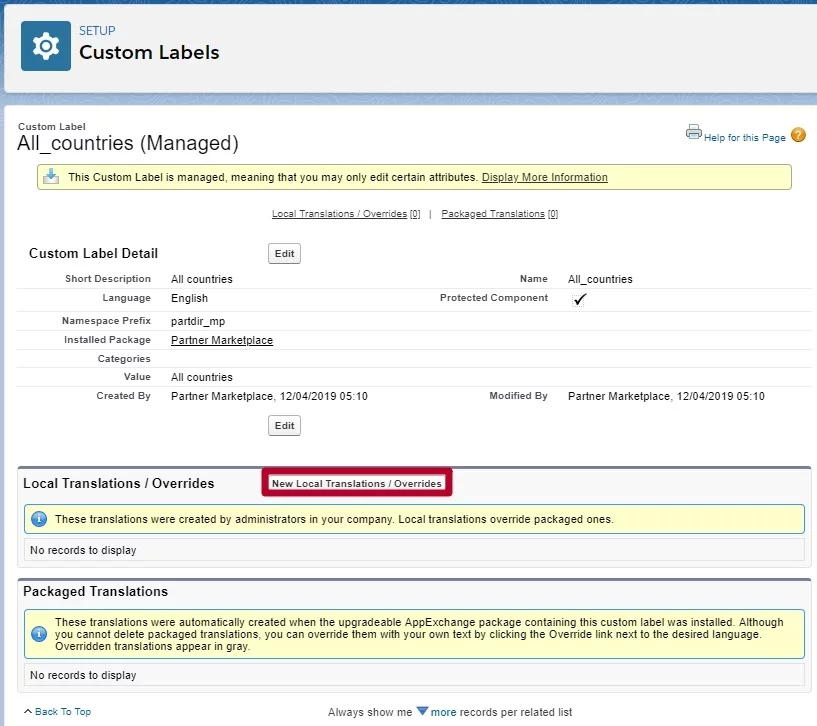
4. Select the language you are translating into and enter the Translation Text. This text overrides the value specified in the label’s Value field.
5. Save changes.
6. Log in as a user with that language to verify.
You can also edit or delete your local translations/overrides in Salesforce.
Troubleshooting
There are a couple of possible reasons why the translation may not appear:
- User language differs from translation language
- The browser or platform cache is not refreshed
- Missing permissions to view the component
- Label overridden in another layer
- Page not reloaded in the Experience Cloud site
Data Access & User Permissions in Experience Cloud Sites

Video Instruction on How to Translate/Rename Custom Labels in Managed Packages installed in Experience Cloud Site
We created a video that walks you through how to locate packaged Custom Labels and create local translations step by step in Salesforce, showing exactly where to find all the required settings.
Translate/Rename Custom Field Labels
If you have installed custom field labels, field sets, buttons, or links as part of a managed package, you may find that you cannot edit or delete them. However, you can override custom labels in Salesforce to add new label values or translations.
To change custom field labels:
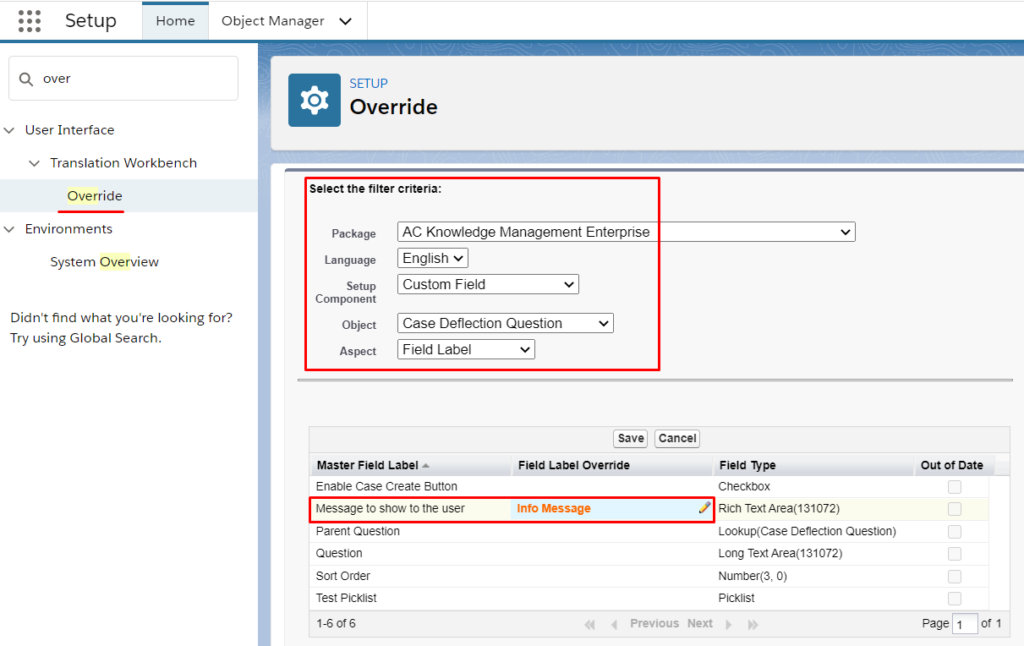
- Navigate to Setup and select Translation Workbench → Click on Override.
- Choose the package that contains the labels you want to modify.
- If you need to make overrides in multiple languages, select the appropriate language from the list.
- Select the setup component you want to change (such as an action, button, custom field, or field set) → Choose the relevant object and aspect.
- Double-click on the override column → Enter the new value you want to use for the label.
- Save and verify on the page or in Experience Cloud.
Watch the Video Instruction on How to Change Custom Field Labels in Salesforce
This video demonstrates how to change field display names in managed packages in Salesforce.
Need Help?
If you manage multiple languages, large packages, or enterprise Experience Cloud deployments, doing label overrides systematically can save a lot of confusion for users. If you want help implementing this across environments or apps from AppExchange, a specialized Salesforce partner like Advanced Communities can streamline the process and avoid conflicts. Contact us to discuss your case.
Meet our AC Events Enterprise
Final Words
In addition, we offer powerful solutions for your Experience Cloud needs, such as Salesforce event management, Salesforce knowledge management tool, association management software in Salesforce, and many more. If you require support in implementing Salesforce online communities, support or PRM portals, we’re also available to provide assistance.
FAQ
1. How do You Translate Custom Field Labels in Salesforce?
Navigate to Setup and enter Custom Labels in the Quick Find box. Select Custom Labels. Choose the name of the custom label to open. In the Translations related list, hit New to enter a new translation or Edit next to the language to change a translation. Select the Language you are translating into.
2. How to Rename Managed Package Fields in Salesforce?
Go to Setup and enter ‘Translation Workbench’ in Quick Find box. Find Translation workbench –> Go to ‘override’ option. Select package Name, Language, Setup component, Object and Aspect as per required.
3. Can I rename fields in a managed package?
You cannot rename the API Name of a field in a managed package. You can only change the displayed label by using translations or overrides in Salesforce.
4. What’s the difference between translating and overriding labels?
A translation provides language-specific text that appears when a user’s language matches that translation. An override replaces the displayed label value regardless of the original wording defined in the managed package.
5. Why doesn’t my translated label appear?
The most common reasons are mismatched user language, missing permissions, or cached pages. Verify the language settings and refresh the page or clear cache to ensure the updated label is loaded.
6. Do I need Translation Workbench enabled?
Yes, Translation Workbench must be enabled to manage translations and overrides. You also need to activate the languages you plan to use.
7. Can I do this for multiple languages?
Yes, you can add translations or overrides for as many languages as needed. Each language must be configured and saved separately.
8. Does this affect Experience Cloud pages?
Yes, translated or overridden labels appear in Experience Cloud when the user’s language matches the configured translation. The change affects only display text and does not modify the underlying component.