
5 Exciting Experience Cloud Features in the Salesforce Winter ’24 Release and Key Preparation Notes
The Salesforce Winter ’24 release brought a meaningful set of updates for Experience Cloud, from smarter visibility rules to a completely new approach to component styling. But getting the most out of any Salesforce release isn’t just about knowing what’s new. It’s also about making sure your org is ready before the rollout hits. This article covers how to prepare for the Winter ’24 upgrade and which Experience Cloud features are worth your attention.
Prepare for the Salesforce Winter ’24 Release!
Salesforce rolls out new releases three times a year, and each one follows a staged schedule, meaning the exact date your org gets upgraded depends on your specific Salesforce instance. Two orgs at different companies may receive the same release weeks apart.
How to Check Your Release Timeline
If you know your instance name, head to Salesforce Trust, find your instance, and select “Maintenance.” This will show you the precise date when Winter ’24 is scheduled to reach your org. If you’re unsure which instance you’re on, check your browser’s address bar when logged into Salesforce, your company’s org settings, or use the nslookup command on your computer.
What to Review Before Rollout
Once you know your timeline, it’s worth building a short pre-release checklist:
- Read the release notes. Salesforce publishes release notes in advance. Use the filters in Salesforce Help to focus only on the products and editions your org actively uses. There’s no need to read through changes that don’t apply to you.
- Sign up for a pre-release org. Test the new features and determine which ones are suitable for your organization before your sandbox is upgraded. You can do this by signing up for a test environment with the new release features enabled, also known as a pre-release org. Keep in mind that pre-release orgs will not retain any of your configurations.
- Test in your Sandbox. Once you have familiarized yourself with the pre-release org and examined the Release Notes for the relevant features, it’s time to assess the potential utility of those specific features and how they might influence the way your organization utilizes Salesforce. Use your sandbox to gain advance access to new features and experiment with configurations, all without affecting your live environment prior to the planned production upgrade.
Salesforce Winter '24 Release: Key Dates to Keep in Mind

New Salesforce Experience Cloud Features and Key Updates
With prep out of the way, here’s a look at the five Experience Cloud updates from Winter ’24 that are most likely to matter for your team.
1. Enhanced flexibility with expression-based visibility rules
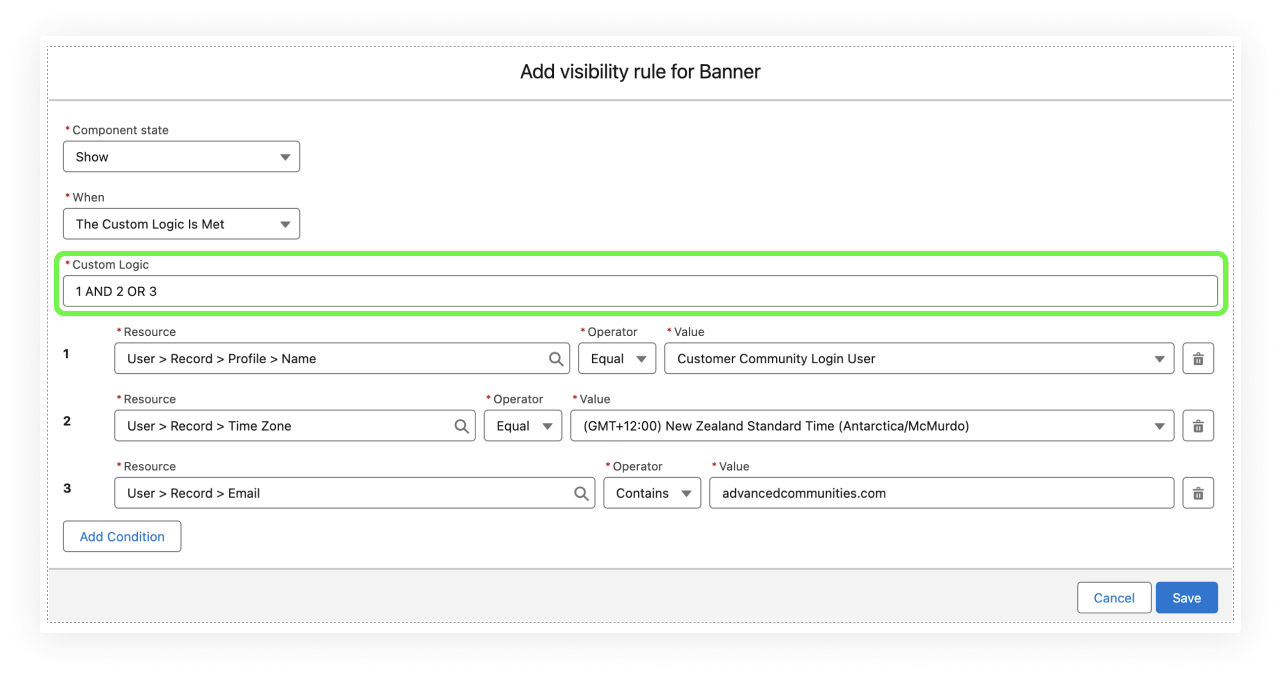
Visibility rules for enhanced LWR sites got a significant upgrade. Previously, a single rule was limited to one logical operator: either AND or OR. With Winter ’24, you can combine both operators within the same rule, making it possible to build more nuanced, conditional logic without workarounds.
Expression-Based Visibility is now generally available. From the new Visibility tab in the component property panel, you can construct rules based on User object and Profile fields, targeting individual components precisely. You can also access fields on the User and Product objects, giving you better control over which users see which components and when.
2. Easily find components in Experience Builder
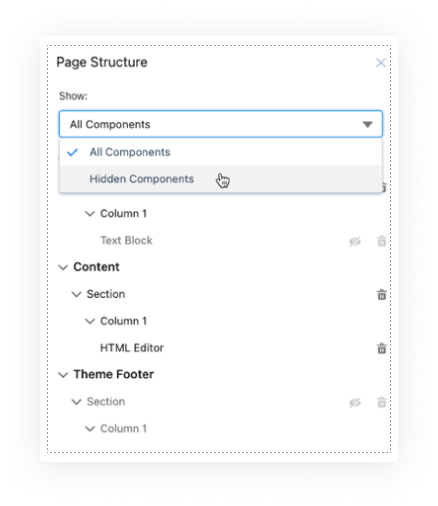
Navigating large or complex sites in Experience Builder got noticeably easier. The canvas and the Page Structure panel are now synchronized: clicking a component in the Page Structure panel automatically scrolls the canvas to that component and opens its property panel. The reverse is also true: clicking on the canvas updates the Page Structure panel to reflect your selection.
An additional small but useful change: the label for any selected component on the canvas now displays in full, even when the component itself is narrow. It’s a minor detail that makes a real difference during editing.
3. Creating component variations in enhanced LWR sites (beta)
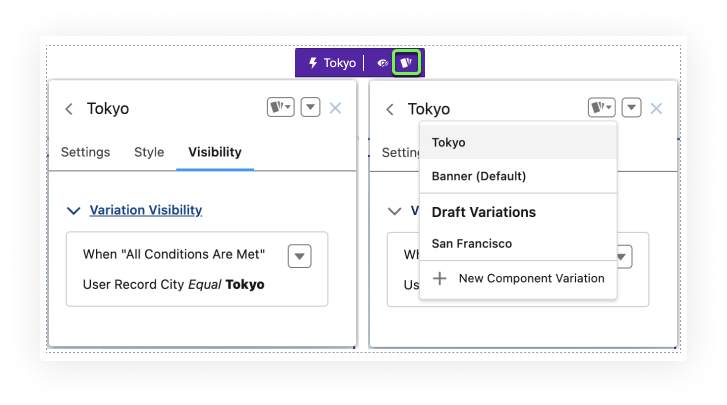
Component Variations, introduced in Winter ’24 as a beta feature, let you create multiple versions of a single component and use visibility rules to control which version different users see. This removes the need to duplicate components or build complex conditional logic outside the component itself.
To get started, open your component, select the Component Variations dropdown, and choose New Component Variation.
Component Variations are part of a Beta Service, offering customers the option to explore this feature at their discretion. Any use of the Beta Service is subject to the applicable Beta Services Terms provided at Agreements and Terms.
4. Add custom CSS using the new Style tab
Site builders with CSS knowledge now have a dedicated place to work. The new CSS Class property is available on all Lightning web components in your LWR site and is accessible through the Style tab in the component property panel. You can define CSS classes in your site’s Head Markup and apply them to any component, including custom LWCs built specifically for your site.
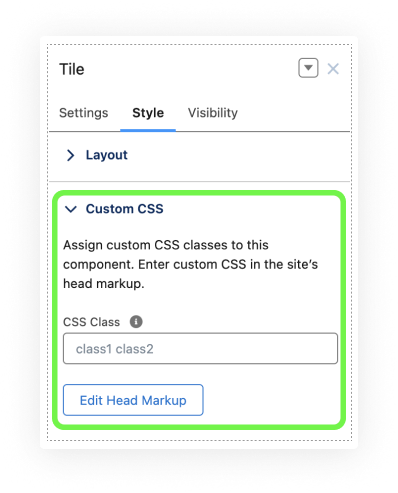
This gives teams with frontend expertise a more direct way to control the look and feel of individual components without having to work around the standard theming options.
5. Boosting functionality with the Actions Bar component
The Actions Bar component allows users to create and update Salesforce records directly from within an LWR site. It can be added to any object detail page and styled to match your site’s branding settings, and it now appears by default in the Components palette on more object detail pages than before.
To use it, drag the Actions Bar component onto an object detail page, then configure the actions you want to expose.
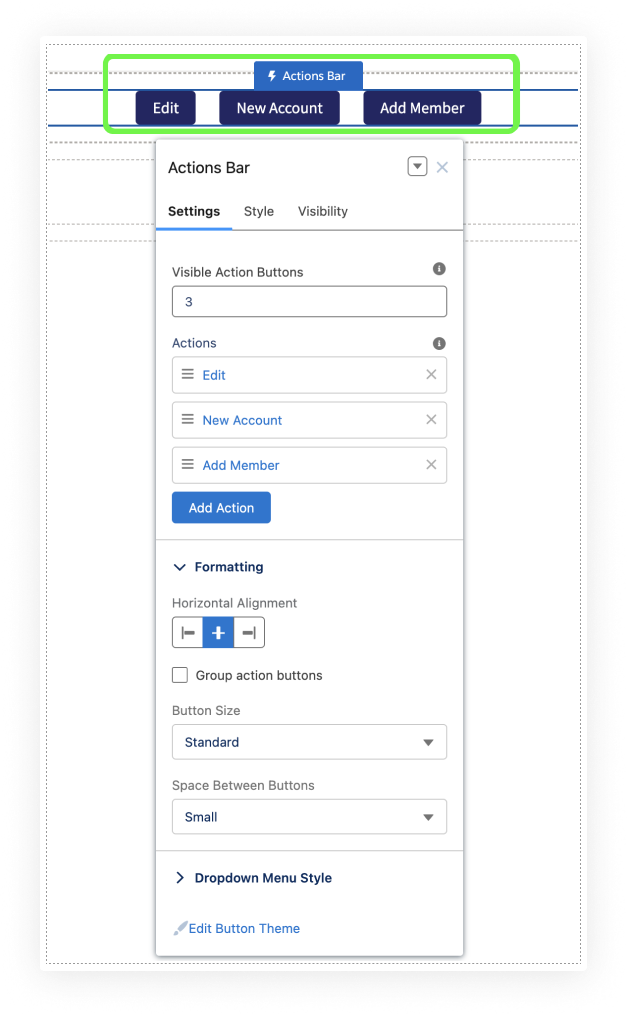
The component supports Edit (standard action), Create a Record, Update a Record quick actions, and headless LWC quick actions. For teams building data-driven experience sites, this opens up meaningful self-service capabilities without requiring users to leave the page they’re on.
Summer '23 Experience Cloud Features: Most Exciting Salesforce Updates

Wrapping Up
The Winter ’24 release was a solid step forward for Experience Cloud, particularly for teams focused on personalization and site-building efficiency. Expression-based visibility rules, the new Style tab, and the Actions Bar component together give admins and developers more precise control both over the logic behind what users see and how they interact with records.
More broadly, the release is a reminder of why staying on top of Salesforce updates matters. The most value comes not from reading the release notes once, but from actually testing changes in advance in a sandbox, against your real configuration so your team knows exactly what to expect when production upgrades.